
Last updated: October 2026
Choosing an East Africa self-drive route is less about a perfect map and more about matching parks to your driving comfort. Tanzania, Kenya, and Uganda each reward a 4×4 — yet the roads, border days, and “when you need a guide” moments feel different.
This comparison helps you pick a country focus — or a careful multi-country loop — without stacking too many kilometres into too few days. For vehicles and cross-border planning, start with East Africa self-drive 4×4. Country deep-dives: Tanzania roads and parks and Kenya self-drive basics.

Tanzania shines for a classic Northern Circuit self-drive: Tarangire, Ngorongoro highlands, and the Serengeti, usually launched from Arusha or Kilimanjaro Airport (JRO). Expect longer park days and a clear need for a licensed guide on the Ngorongoro Crater floor.
Kenya is often the easiest first East Africa self-drive for many visitors: Nairobi as a hub, then Masai Mara, Amboseli, or the Rift lakes. Distances are still real — especially Nairobi to the Mara after rain — but the road network and lodge density feel familiar quickly.
Uganda suits travelers who want green parks, tree-climbing lions in Ishasha, boat days on the Kazinga Channel, and gorilla or chimpanzee permits as a separate plan. Self-drive works between Entebbe/Kampala and Queen Elizabeth or Murchison; gorilla forests usually mean leaving the vehicle and walking with a ranger team.
Rwanda can join a Uganda loop (Volcanoes, Akagera, Lake Kivu) for guests with extra days. Keep it as a short add-on, not a third full safari crammed into one week. See Rwanda self-drive 4×4 if Kigali is on your map.
The usual pattern starts in Arusha: Tarangire, then Karatu / Ngorongoro rim, then Serengeti, then back through the highlands. Outside parks you often meet tarmac; inside parks you meet corrugations, dust, and mud in the rains. Gate times matter. Fuel early in Arusha and Karatu.
Self-drive is realistic in Tarangire and much of the Serengeti with a capable 4×4 and valid park entry. The crater floor is the main exception — plan a guided descent. Full road and guide detail lives in our self-drive safari Tanzania guide. Vehicle options: Tanzania self-drive 4×4.
Choose Tanzania when open plains, big herds, and a classic safari rhythm matter more than short transfer days. Skip stacking the Southern Circuit onto a first Northern trip unless you have time to spare.

Most plans leave Nairobi (after JKIA) for the Masai Mara, Amboseli, or lakes Naivasha / Nakuru. The Mara run is often 5.5–7 hours toward eastern gates in fair weather; western lodges and wet tracks take longer. Amboseli is a southeastern day with Kilimanjaro views; the Rift lakes suit shorter first or last park days.
Kenya self-drive feels approachable if you already like dirt roads and left-side driving. Conservancy access near the Mara can differ from the main reserve — confirm your lodge gate before you leave Narok. Deep notes: self-drive Kenya safari — what to know. Vehicles: Kenya self-drive 4×4.
Choose Kenya when you want flexible lodge hops from one capital, strong big-cat odds in the Mara, and an easy add-on flight via Wilson if rains threaten the road.
Pickup is usually Entebbe or Kampala. Popular self-drive arcs run west to Queen Elizabeth National Park (including Ishasha for tree lions when luck holds) or north to Murchison Falls. Roads mix tarmac and rough park tracks; storm seasons make western Uganda slower.
Gorilla trekking in Bwindi or Mgahinga is a highlight for many Uganda trips, yet it is not a “drive yourself to the nest” activity. You drive to the sector, then walk with rangers on a permit day. Budget drive days separately from trek days so you are not exhausted at the trailhead.
Choose Uganda when you want green landscapes, water-based game viewing, and forest primates alongside savanna parks. Vehicles and quotes: Uganda self-drive 4×4.
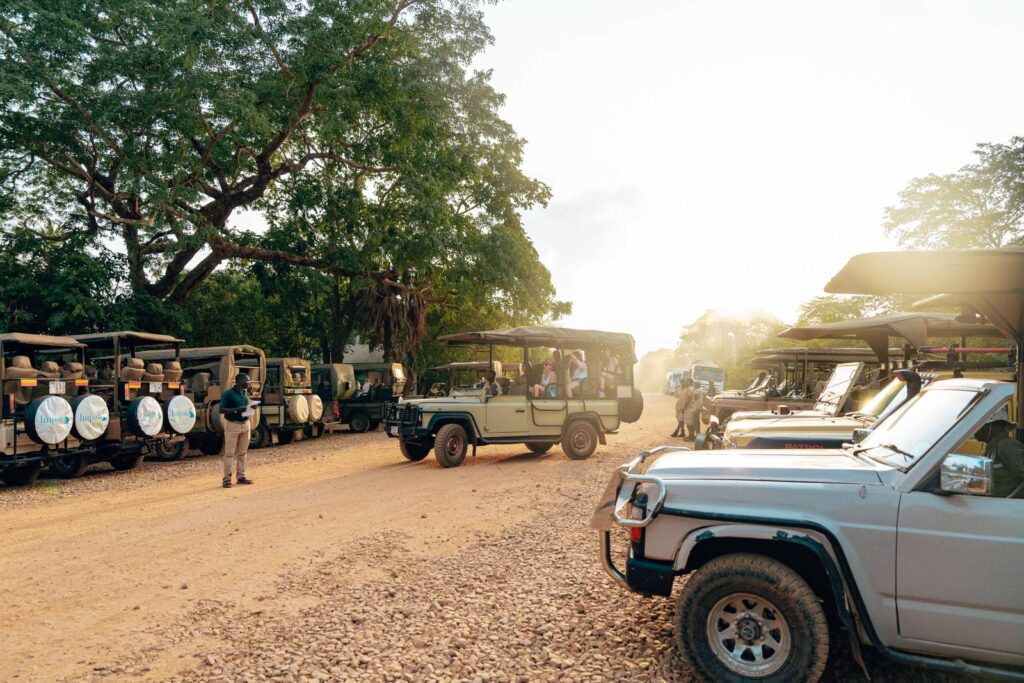
Popular ideas include Kenya + Tanzania via Namanga or other crossings, or Uganda + Rwanda around the southwest. Each border needs its own buffer for paperwork, insurance, and fuel rules. Do not plan a crater day or a gorilla trek on the same afternoon you cross.
A sane two-country example: five to seven nights Kenya (Mara focus), border day, then five to seven nights Tanzania (Serengeti / Ngorongoro). Or Uganda Queen Elizabeth and Bwindi, then a short Rwanda Volcanoes or Akagera finish. Three countries in two weeks usually means more windshield than wildlife.
Airport choice shapes the loop. JRO, JKIA, EBB, and KGL are not interchangeable on the same afternoon — see the East Africa airport cheat sheet before you lock flights.
Guides are not a failure of self-drive. They are how you stay legal on crater floors, find cats faster, and enjoy a day when rain turns tracks soft. Hybrid weeks are normal across East Africa.
Dry months generally mean firmer tracks and more dust on Serengeti, Mara, and Amboseli roads. Long rains (often March–May) slow transfers in all three countries and can close or soften favourite loops. Uganda’s west stays greener and can feel wetter even outside the classic long-rain window. Build spare hours everywhere; do not copy a dry-season timetable onto a wet-season calendar.
Wildlife highlights shift too. Mara–Serengeti migration timing is seasonal and never a fixed promise for a single week. Gorilla permits in Uganda and Rwanda are year-round activities but trail conditions change with rain. Pick your country for the experience you want in that month — not for a social-media date stamp.
A safari-ready 4×4 with high clearance is the shared tool. Pop-tops help for game drives; closed roofs can feel better on long dusty connectors. For multi-country trips, confirm that your agreement allows the crossing, what insurance covers abroad, and who carries the vehicle documents at the border. Surprises at the booth cost daylight.
Carry your national driving licence and any international permit your supplier lists. Keep passport copies separate from the originals. Photograph the vehicle at each country pickup or handoff. If you change vehicles at a border — sometimes smarter than one car for the whole odyssey — plan the meeting point like a flight connection, with buffer.
Highway stretches near Nairobi, Arusha, or Kampala can feel busy and fast. Park roads flip the script: slow, corrugated, shared with elephants and cattle. Village speed zones matter. Night driving between towns is tiring and riskier — aim to reach lodges in daylight. Police checkpoints are normal; have documents ready and stay polite.
Fuel quality and pump availability vary. Top up in major towns before long park entries. Carry water and a soft bag so gate checks stay simple. When two sandy tracks look identical, wait for another vehicle or return to a marked junction rather than inventing a shortcut through the bush.
Self-drive can reduce guide wages, yet park fees, fuel, and lodging still dominate the budget. Multi-country insurance and extra border days add cost. Energy matters as much as money: two long dirt transfers back-to-back leave you flat for the best morning game drive.
Ask for written quotes that spell out cross-border days, mileage, and excess. Start from East Africa self-drive or the main self-drive 4×4 hub, then open the country page that matches your focus.
Think of East Africa self-drive as a series of short stories, not one epic that must cross every border. A strong Kenya Mara week teaches you the rhythm. A strong Tanzania Northern Circuit week teaches park patience. A strong Uganda week teaches green-park driving and permit timing. You can collect those stories across years — or link two carefully. Trying to collect all of them in one breathless itinerary is how travellers remember queues more than lions.
If you travel with mixed experience in the car — one keen driver, one keen photographer — decide roles before the trip. The driver needs breaks. Swap seats on tarmac connectors when it is safe and legal. Inside parks, slow loops beat heroic distances. That single habit improves almost every East Africa self-drive, in every country on this list.
JRO or Arusha pickup → Tarangire → Karatu / guided Ngorongoro crater day → Serengeti → return. Details and timing mindset: Tanzania self-drive guide.
Nairobi night after JKIA → Amboseli or Rift lakes → Masai Mara → Nairobi. Or Mara-heavy if cats are the only goal. See Kenya self-drive guide.
Entebbe → Queen Elizabeth (including a boat day) → Bwindi sector for a gorilla permit day → return, or swap in Murchison for falls and Nile wildlife. Keep trek days light on driving.
Kenya’s Nairobi hub and lodge network feel straightforward for many first-timers. Tanzania’s Northern Circuit is very doable with good planning. Uganda is rewarding but greener, wetter, and more permit-driven for primates.
Yes on a long itinerary — rarely wise in under three weeks if you want real park time. Two countries with buffer days beat three countries at a sprint.
They are manageable with the right paperwork and a supplier who knows cross-border rules. They are not a quick stamp-and-go coffee stop. Build a half day to a full day.
Often yes for specific places (Ngorongoro Crater) and for richer wildlife days. Self-drive means you choose when to hire help — not that you never do.
As a compact add-on from Uganda or a short Kigali-based loop — Volcanoes, Akagera, lake time — not as a rushed third safari inside a Tanzania–Kenya week.
When you compare quotes, look past the daily vehicle rate. Ask how many park days are realistic, whether a crater or gorilla day is guided, and what happens if rain forces an extra night. A slightly shorter route with deeper park time almost always beats a long thin line on the map.
Whatever you choose, write the plan down with gate targets, fuel stops, and one spare half-day you are willing to “waste” on weather or a sighting that refuses to end. That spare half-day is not inefficiency — it is how East Africa self-drive stays enjoyable when the road rewrites your morning. Pack patience the same way you pack water: you will use it.
East Africa self-drive works when the route matches your confidence and your calendar. Tanzania delivers the classic Northern Circuit. Kenya offers a flexible Nairobi-based safari. Uganda adds green parks and primate days. Pick one strong story first; add a second country only with border buffers and spare nights.
Ready for numbers and vehicle options? Request a quote via East Africa self-drive 4×4, or go straight to Tanzania, Kenya, or Uganda self-drive pages.

Last updated: October 2026 A self-drive Kenya safari lets you set the pace from Nairobi to the Masai Mara, Amboseli, or Lake Nakuru — with the open sky above the roof and no fixed game-drive clock. It also asks more
Last updated: October 2026 A self-drive safari Tanzania trip sounds free and open: you hold the keys, you pick the pace, and you stop when the light is right. It can be a wonderful way to see the Northern Circuit

Last updated: October 2026 You land in Entebbe (Uganda’s main international airport). Your dream is to see mountain gorillas in Bwindi Impenetrable Forest. Then someone asks: should we stay near Buhoma or Ruhija? Those two names are areas of the