
Last updated: October 2026
A self-drive safari Tanzania trip sounds free and open: you hold the keys, you pick the pace, and you stop when the light is right. It can be a wonderful way to see the Northern Circuit — if you respect the roads, the park rules, and the days when a local guide is not optional.
This guide covers the roads between Arusha, Tarangire, Ngorongoro and the Serengeti, what self-drive looks like inside the parks, and when you need a guide instead of going alone. For vehicle options and pickup from Arusha or Kilimanjaro Airport (JRO), see Tanzania self-drive 4×4. If you are still weighing self-drive against a driver-guide, start with self-drive vs with-driver in Tanzania.

Self-drive works best when at least one person in the car is a confident dirt-road driver, happy with maps and slow park speeds, and ready for long days behind the wheel. Couples and small groups who like independence often love it. Families with very young children, first-time African drivers, or tight “must see everything” schedules often enjoy the trip more with a driver-guide.
You still pay park fees, fuel, and lodging. What you gain is flexibility. What you give up is a local who already knows which kopje held lions at dawn and which track turns to mud after lunch.
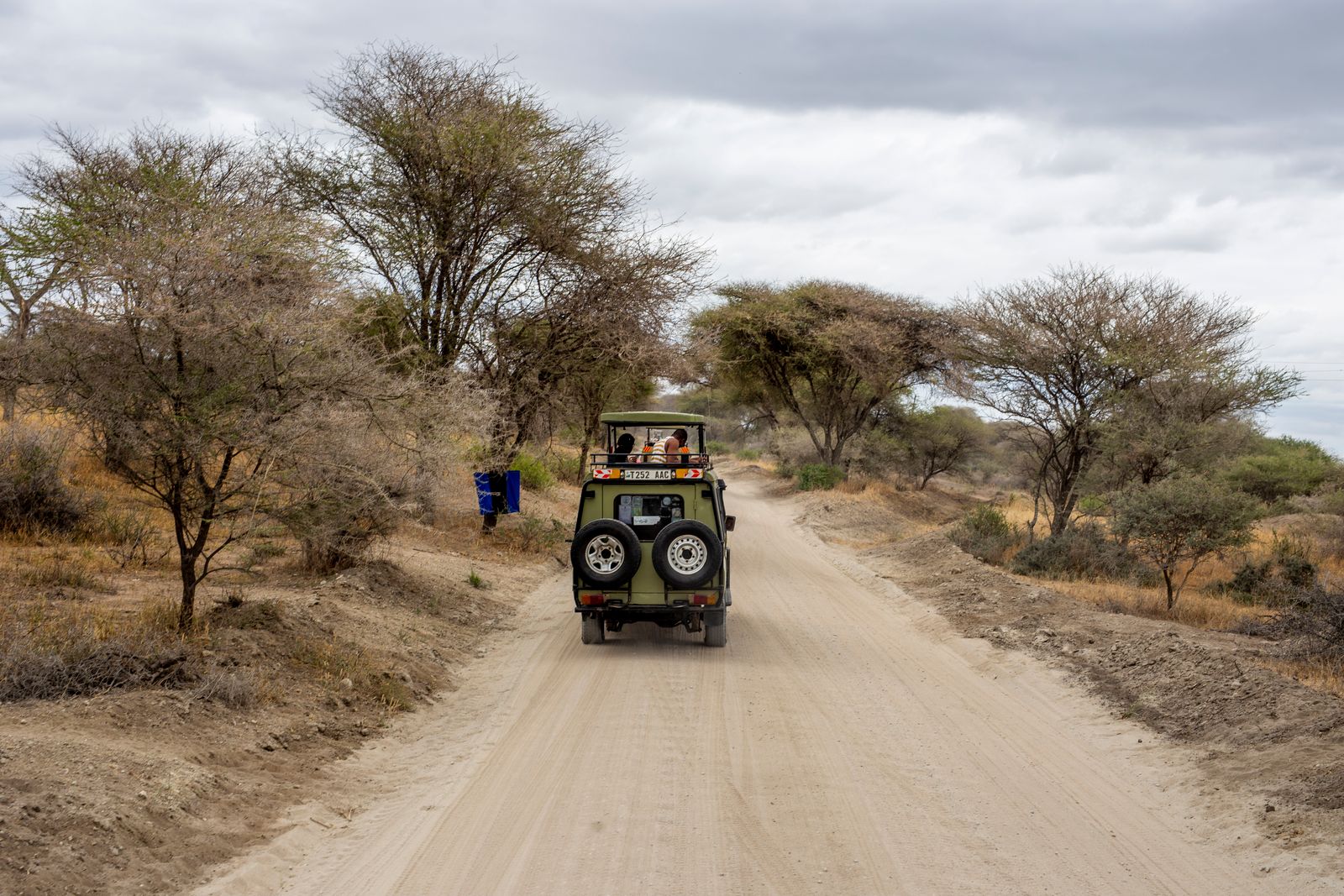
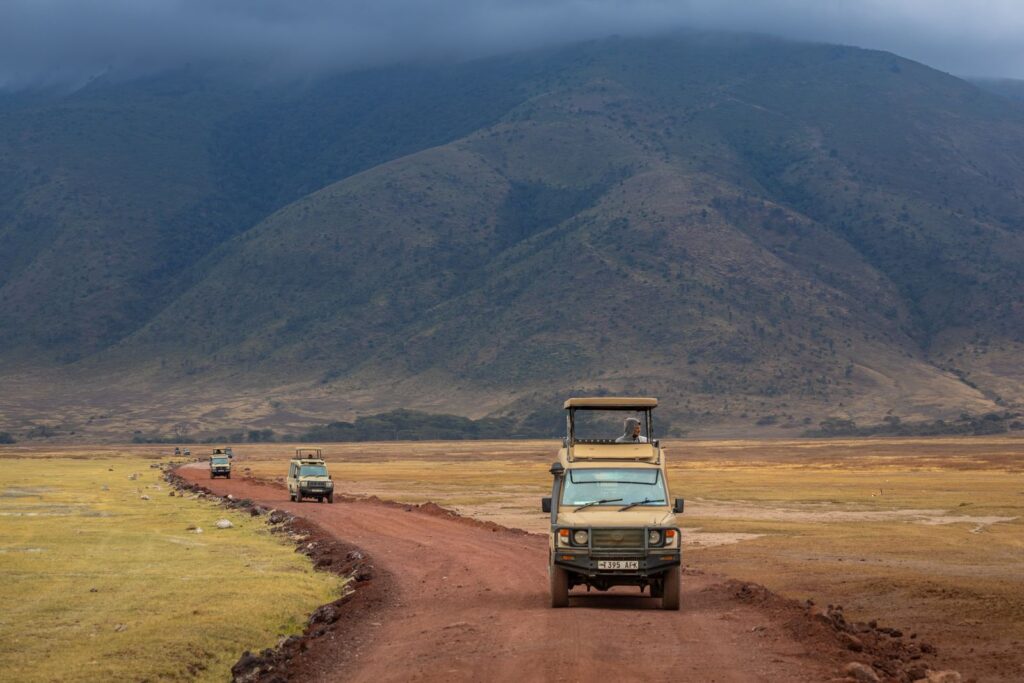
Most self-drive safari Tanzania routes start around Arusha. From there you fan out to Tarangire, Lake Manyara, the Ngorongoro highlands, and the Serengeti. Outside the parks, main roads are often tarmac. Inside the parks, expect corrugated dirt, dust in the dry months, and soft mud in the rains.
The run south toward Tarangire is one of the easier first park days. Allow roughly 2–3 hours from Arusha to the main gate, longer if you leave late or stop for supplies. Inside the park, stay on marked tracks. Elephants near the road are common — give them space and keep the engine quiet.
The climb toward Karatu and the Ngorongoro Conservation Area is cooler and greener. Karatu is a practical overnight stop with fuel, ATMs, and groceries before you enter the crater area or continue west toward the Serengeti. Fog and rain can slow the rim road — leave daylight margin.
From the Ngorongoro gate toward Seronera, the day gets longer. Distances look modest on a map, yet park speed limits and wildlife stops stretch the clock. Plan fuel before you enter deep into the park. Services thin out once you leave the highland towns.
Park rules change over time, so confirm fees and access with your booking team before you leave Arusha. These patterns are what most self-drivers meet today.
Tarangire and Lake Manyara are usually the most straightforward self-drive parks on this circuit. You enter with valid park tickets, stick to open roads, and leave before gate closing time. Both parks reward slow driving — birds, elephants, and viewpoints are easy to miss if you rush.
The Serengeti allows self-drive visitors with the right park entry. Stay on designated roads. Do not drive at night inside the park. Keep a safe distance from predators and never leave the vehicle in open areas except where staff allow it (for example at certain picnic sites). A paper map plus offline GPS helps when dust hides track junctions.
The crater floor is different. You usually need a licensed guide to descend into Ngorongoro Crater, even if you arrived in your own 4×4. Many travelers keep their self-drive vehicle for the rim and highlands, then book a guided crater day — either joining a guide at the gate or arranging a crater vehicle through their lodge or operator. Treat current NCAA rules as the final word, not a blog memory.

Use a guide when the rule book requires it — especially Ngorongoro Crater — and whenever the day is about finding wildlife in a vast park, not just covering kilometres. A good guide reads tracks, knows seasonal animal movement, and keeps you out of soft sand that looks firm until you are axle-deep.
Also hire help when:
A hybrid plan works well for many guests: self-drive between towns and easier parks, then add guided days for the crater and one or two Serengeti game drives. Vehicle choices for that mix sit on our Tanzania 4×4 page.
Dry months (often June–October) mean firmer tracks and more dust. Short rains (around November–December) can green the grass without closing every road. Long rains make some Serengeti and crater approaches slow or sticky. Build spare hours into every transfer day rather than stacking lodge check-ins back to back. For month-by-month wildlife context, see best time for a Tanzania safari.
Safety questions beyond driving — camps, health, and common worries — are covered in Are Tanzania safaris safe?
Most Northern Circuit self-drive trips begin with pickup in Arusha or at Kilimanjaro International Airport (JRO). Arusha is calmer if you land late and want a night of sleep before the first park day. JRO pickup saves a transfer if your flight arrives in daylight and you already hold lodge bookings for that night.
Ask for a safari-ready 4×4 with high clearance, a reliable spare tyre, and a jack you can actually use. Pop-top roofs help for game drives; a closed roof can feel better on long dusty transfers between towns. Check whether roof tents, fridges, or camping kit are included if you plan nights outside lodges. Details and quotes sit on Tanzania self-drive 4×4, with the wider East Africa view on self-drive 4×4 hire.
Before you leave the yard, walk around the vehicle with the supplier. Note scratches, test lights and wipers, and confirm the insurance excess in writing. Photograph the odometer and fuel level. Those five minutes prevent awkward talks at return.
Phone maps help near Arusha and Karatu. Inside the Serengeti they can fail you. Download offline maps, carry a paper park map, and learn the main junction names toward Seronera, Naabi Hill, and your lodge airstrip road. When two sandy tracks look identical, wait for another vehicle or turn back to the last marked junction rather than inventing a shortcut.
If you sink into soft sand, do not spin the wheels into a deeper hole. Deflate slightly only if you know how to reinflate later, clear sand from the axles, and use traction mats or brush if you packed them. Many self-drivers never need this — yet the ones who do are glad they packed gloves and water. Lodge radio rooms and park rangers are the right call when you are truly stuck, not a random push from strangers on a remote track.
Tell someone your planned gate times each morning. If you go quiet for half a day, they know where to start looking. That habit matters more than any gadget.
Self-drive does not mean “cheap safari.” Park fees for TANAPA and the Ngorongoro Conservation Area add up per person per day. Budget for fuel, one or two guided crater or Serengeti days, drinking water, and tip money for guides you do hire. Lodges and public campsites price differently — campsites need more of your own cooking and gear time.
Compare the full picture, not only the daily vehicle rate. A guided week can cost more on paper and still feel worth it if you see more and drive less. A self-drive week can cost less on paper and still feel expensive if you burn fuel on wrong turns and miss wildlife. Honest quotes help you choose; ask for both styles if you are unsure.
One common pattern: land at JRO, pick up in Arusha, overnight in town or nearby, then Tarangire (1–2 nights), Karatu / Ngorongoro rim (1–2 nights with a guided crater day), Serengeti (2–3 nights), and return via the highlands. Stretch nights if you dislike long drive days. Shorten only if you accept more time on the road than in the bush.
Whatever the map says, treat every park transfer as a half-day of travel. Lunch stops, photo breaks, and a giraffe in the middle of the track are part of the journey — not delays to fight.
Yes, with valid park entry and a suitable 4×4. Stay on open roads, follow gate hours, and avoid night driving inside the park. A guide still helps if wildlife viewing is your main goal.
Usually no. Plan on a licensed guide for the crater floor. Confirm the latest rule when you book, because conservation area policies are updated from time to time.
For the Northern Circuit parks, yes. A high-clearance 4×4 handles corrugations, soft sand, and wet patches far better than a city car. Pop-top safari vehicles help for game viewing; closed 4x4s can work if you accept standing less for photos.
Bring a valid licence from your home country. Many visitors also carry an International Driving Permit because some insurers and checkpoints like to see it. Ask your vehicle supplier what they require before arrival.
The driving itself is manageable for experienced dirt-road drivers. The harder parts are navigation, timing gates, and finding animals without local knowledge. That is why mixed trips — self-drive plus guided crater or Serengeti days — are popular.
If your route later crosses into Kenya or Uganda, treat each border as its own planning day — paperwork, fuel, and insurance differ by country. For multi-country ideas after Tanzania, keep the same self-drive discipline: short days, early fuel, and guided help where park rules ask for it.
Comparing countries before you lock the route? See self-drive Kenya safari basics and our East Africa self-drive route comparison (Tanzania vs Kenya vs Uganda). For multi-country vehicle planning, open East Africa self-drive 4×4.
A self-drive safari Tanzania adventure rewards patience, good planning, and respect for park rules. Tarangire and parts of the Serengeti can work well on your own. Ngorongoro Crater is the clear moment to add a licensed guide. Build short drive days, fuel early, and leave room for the unexpected.
When you are ready to match a vehicle to that plan — self-drive, with-driver, or a mix — request a written quote on Tanzania self-drive 4×4 or browse the wider Tanzania 4×4 options.

Last updated: October 2026 Choosing an East Africa self-drive route is less about a perfect map and more about matching parks to your driving comfort. Tanzania, Kenya, and Uganda each reward a 4×4 — yet the roads, border days, and

Last updated: October 2026 A self-drive Kenya safari lets you set the pace from Nairobi to the Masai Mara, Amboseli, or Lake Nakuru — with the open sky above the roof and no fixed game-drive clock. It also asks more
Last updated: October 2026 You land in Entebbe (Uganda’s main international airport). Your dream is to see mountain gorillas in Bwindi Impenetrable Forest. Then someone asks: should we stay near Buhoma or Ruhija? Those two names are areas of the