

Last updated: October 2026
A self-drive Kenya safari lets you set the pace from Nairobi to the Masai Mara, Amboseli, or Lake Nakuru — with the open sky above the roof and no fixed game-drive clock. It also asks more of you: left-side driving, long dirt stretches, park gate times, and wet-season mud that can turn a “short hop” into a half day.
Here is what to know before you take the keys — who self-drive suits, how the main routes feel, park basics, and when a driver-guide still makes sense. To arrange a vehicle, see Kenya self-drive 4×4. For pure Mara road timing, keep how long the drive from Nairobi to Masai Mara takes open beside this guide.
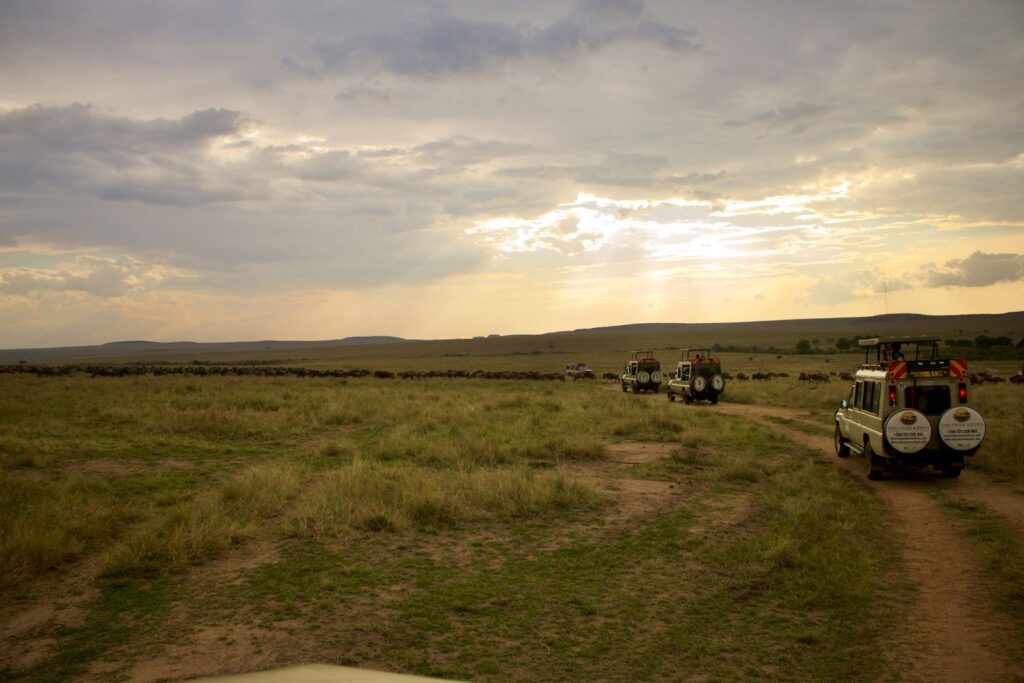
Self-drive fits confident dirt-road drivers who enjoy navigation and do not mind arriving dusty and happy. It works well for couples and small groups who want flexible lodge hops and picnic lunches on their own schedule. It is harder work for first-time African drivers, tight itineraries, or anyone who prefers to watch the bush instead of watching the road.
If your dream is cats at dawn and you only have three or four park days, a driver-guide often finds more wildlife in less time. Many guests mix both: self-drive between towns, then guided loops inside the Mara or Amboseli.
JKIA (Jomo Kenyatta International Airport) is where most long-haul flights land. Wilson Airport is the small airport for many Mara bush flights. Do not assume they are interchangeable on arrival day — traffic between them can eat an hour or more. Our JKIA vs Wilson Airport guide helps you choose road vs air for a Mara week.
Spend the first night in Nairobi when you land late. Rest, check the vehicle in daylight, buy water and snacks, and leave for the parks early the next morning. Trying to reach the Mara the same evening you clear immigration is a common stress recipe.
Drive on the left. Carry your passport, driving licence, and any international permit your supplier asks for. Photograph the vehicle, fuel level, and odometer at pickup. Confirm insurance excess and what happens with tyre damage on park roads — in writing.
Most self-drive Kenya safari plans put the Mara first or last. Expect roughly 5.5–7 hours toward eastern gates such as Sekenani or Talek in good conditions, longer after rain or toward western / Mara Triangle lodges. Distance is often about 225–280 km depending on your lodge road. Full timing detail sits in the Nairobi–Masai Mara drive guide, with gate and wet-season notes in JKIA to Masai Mara by road.
Fuel up in Nairobi and again in Narok when you can. Inside the reserve, services are limited. Keep gate closing times in mind — arriving after dark is a bad plan on bush tracks.
Amboseli sits southeast toward the Tanzanian border, with Kilimanjaro views on clear mornings. Allow roughly 4–5 hours from Nairobi in normal traffic, more if you stop in towns or hit truck congestion. Park roads can be dusty in the dry season and sticky after storms. Elephants near the tracks are a highlight — give them room and keep windows ready for dust, not for hanging out.
The Rift Valley lakes are shorter days from Nairobi — often 2–3.5 hours toward Naivasha and a bit more to Nakuru, traffic willing. They suit a gentle first park day or a last stop before a flight. Nakuru’s rhino and bird life reward slow loops; Naivasha is more about lake edge and Hell’s Gate for active travelers. Combine them with the Mara only if you accept more driving than game viewing.

Kenya Wildlife Service (KWS) parks and the Masai Mara reserve system use entry tickets and gate hours. Rules differ slightly by park — always check current fees and whether night driving or off-road driving is banned (usually it is). Stay on marked roads. Do not follow cats into the grass. Picnic only where allowed.
In the Masai Mara, know which gate and conservancy your lodge uses. Conservancies next to the reserve can have different access rules and vehicle limits. Your lodge letter or booking confirmation should name the meeting point. If you are unsure, ask before you leave Narok — not when the sun is low and the track forks.
Amboseli and Lake Nakuru are usually straightforward for self-drive once tickets are sorted. Arrive with daylight. Carry water. Keep a soft bag packed so you are not unloading the whole boot at every gate.
Kenya self-drive does not ban guides — it just means you can choose when to hire one. Book a guide or driver-guide when wildlife is the priority, when rain has made tracks soft, or when you are new to bush driving. A local who knows the morning lion loops saves hours of empty kilometres.
Also hire help when crossing into a conservancy that requires accompanied vehicles, when you want a full-day Mara loop without navigating, or when one traveler prefers not to drive after a long flight. Hybrid weeks are normal: you keep the 4×4 for Nairobi–park transfers and add guided game drives on key days.
Dry months often mean firmer Mara tracks and more dust on the windshield. The long rains (often March–May) can slow the Nairobi–Mara road and turn black-cotton soil into glue. Short rains around November can be patchy — some days fine, some days sticky. Build spare hours into every transfer. If the forecast looks heavy, consider flying Wilson–Mara and using a vehicle only inside the reserve.
Migration viewing near the Mara River is seasonal and never guaranteed on a fixed calendar date. Self-drive visitors still need patience, early starts, and respect for crowded river viewpoints when the herds are moving.
At pickup, test 4WD briefly if the supplier agrees, check wipers and lights, and ask where the nearest trusted tyre shop sits on your first road. For quotes and fleet options, use Kenya self-drive 4×4 or the wider East Africa self-drive hub.
Top up in Nairobi before any long park day, then again in towns such as Narok on the Mara road when pumps are open. Do not roll into a reserve on fumes hoping for a quiet station at the gate. Carry a little cash for tips, fruit stalls, and small fees; card machines fail when the line is down.
Buy a local SIM or eSIM with data if your home plan is weak. Signal is decent near main highways and patchy inside parks. Download offline maps while you still have Wi‑Fi. Share your day’s route with your lodge or booking contact each morning — if you go quiet, they know which gate you aimed for.
Keep emergency numbers for your vehicle supplier and lodge in the phone and on paper. A flat battery or slow puncture is annoying near Nairobi and serious deep in the Mara. Knowing who answers after hours is part of self-drive, not an afterthought.
Park and reserve fees add up per person per day. Fuel for Nairobi–Mara–return is not a small line item. Add lodging, drinking water, and any guided game drives you book inside the parks. Self-drive can trim the driver-guide wage, yet it does not erase park fees or long kilometres.
Compare full trip cost, not only the daily 4×4 rate. A guided safari may cost more and still feel worth it if you see more with less fatigue. A self-drive week may look lighter on paper and still feel expensive if rain forces an extra night or a bush flight you did not plan. Ask for a written quote that lists vehicle, excess, and mileage rules clearly — start from Kenya self-drive 4×4.
Slow is normal. Corrugations rattle bolts and fill the cabin with dust; lowering speed often gets you there sooner than fighting the washboard. Keep both hands ready for sudden warthogs or livestock near village stretches. Inside parks, stop for photos with the engine stable and leave space for other vehicles at a sighting — nobody enjoys a bumper in their lens.
If rain turns the track shiny and soft, test the surface in a low gear before committing to a long muddy section. Turn back early if the ruts look axle-deep. Getting pulled out costs time, money, and pride. Dusty dry days need another habit: clean the windshield at fuel stops so you still see the giraffe before the giraffe sees you.
Some travelers link Kenya with Tanzania through Namanga or other crossings after Amboseli or the Mara. Treat the border as its own day: paperwork, insurance, and fuel rules change. Do not schedule a crater descent or a Serengeti gate for the same afternoon you cross. Plan the Kenya chapter so it ends cleanly, then start the Tanzania chapter fresh.
One balanced pattern: night in Nairobi after JKIA, two nights Amboseli, one night Naivasha or Nakuru, three nights Masai Mara, return to Nairobi. Swap Amboseli for extra Mara nights if big cats are the main goal. Cut the Rift lakes if you hate long drives. Whatever you choose, treat each park transfer as a half day — not a “quick two hours” on a marketing map.
If you later continue into Tanzania, read the sister guide on self-drive safari Tanzania roads and parks before you plan the border day. Borders need their own buffer, not a squeezed afternoon.
Yes, with valid entry and a suitable 4×4. Stay on open roads, respect gate hours, and learn your lodge’s gate or conservancy access before you leave Narok.
For Mara, Amboseli, and most park roads, yes. A city car struggles with ruts, mud, and clearance. High clearance matters as much as four-wheel drive.
Only if you land early, clear immigration quickly, and accept a long afternoon on the road. Most travelers sleep in Nairobi and leave at dawn. Same-day runs are tiring and weather-sensitive.
Bring a valid national driving licence. Many visitors also carry an International Driving Permit because suppliers and checkpoints sometimes ask for it. Confirm with your vehicle partner before travel.
Not for every park day — but guides add value for wildlife finding and wet-season driving. Some conservancies require accompanied access. Ask your lodge which rules apply to your stay.
Weighing Kenya against Tanzania or Uganda? Read the East Africa self-drive route comparison, or jump to the Tanzania sister guide on roads, parks, and when you need a guide.
A self-drive Kenya safari rewards patience, early starts, and honest day lengths. Nairobi is your launch pad; the Mara, Amboseli, and Rift lakes each ask for different timing. Keep a 4×4 under you, fuel before the long stretches, and add a guide when finding animals matters more than holding the wheel.
When you are ready, request a written quote on Kenya self-drive 4×4, or plan the Mara road day with our JKIA to Masai Mara transfer page beside the drive-time guide.

Last updated: October 2026 Choosing an East Africa self-drive route is less about a perfect map and more about matching parks to your driving comfort. Tanzania, Kenya, and Uganda each reward a 4×4 — yet the roads, border days, and
Last updated: October 2026 A self-drive safari Tanzania trip sounds free and open: you hold the keys, you pick the pace, and you stop when the light is right. It can be a wonderful way to see the Northern Circuit
Last updated: October 2026 You land in Entebbe (Uganda’s main international airport). Your dream is to see mountain gorillas in Bwindi Impenetrable Forest. Then someone asks: should we stay near Buhoma or Ruhija? Those two names are areas of the